Field Stone Retaining Wall Rebuild Done Right
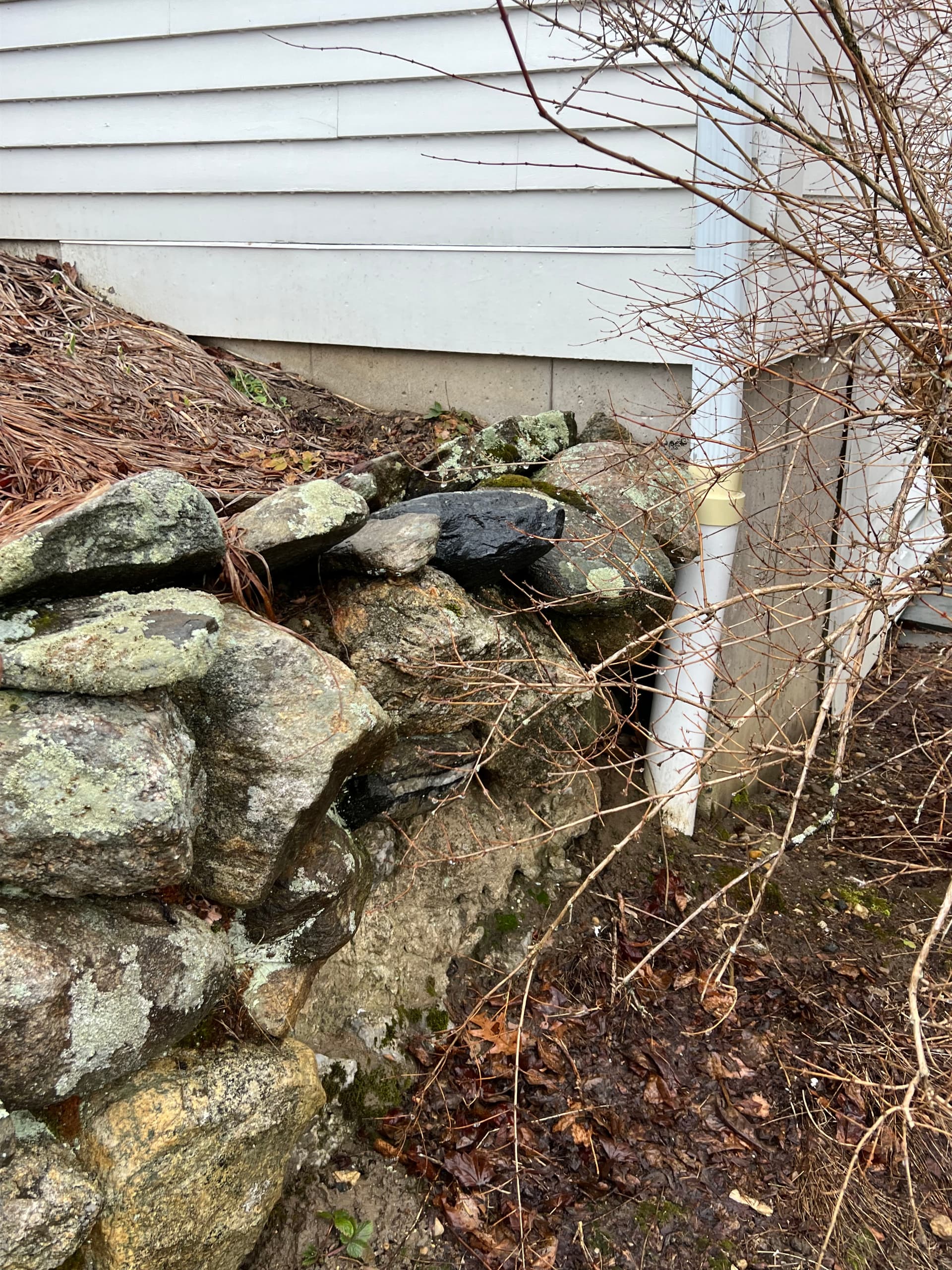
Old stone walls have a way of slowly giving up the fight. Frost heave, water pressure, years of settling - it all catches up eventually. What starts as a few shifted stones turns into a wall that's leaning, crumbling, and no longer doing its job of holding back the hillside. That's exactly what we were dealing with here.
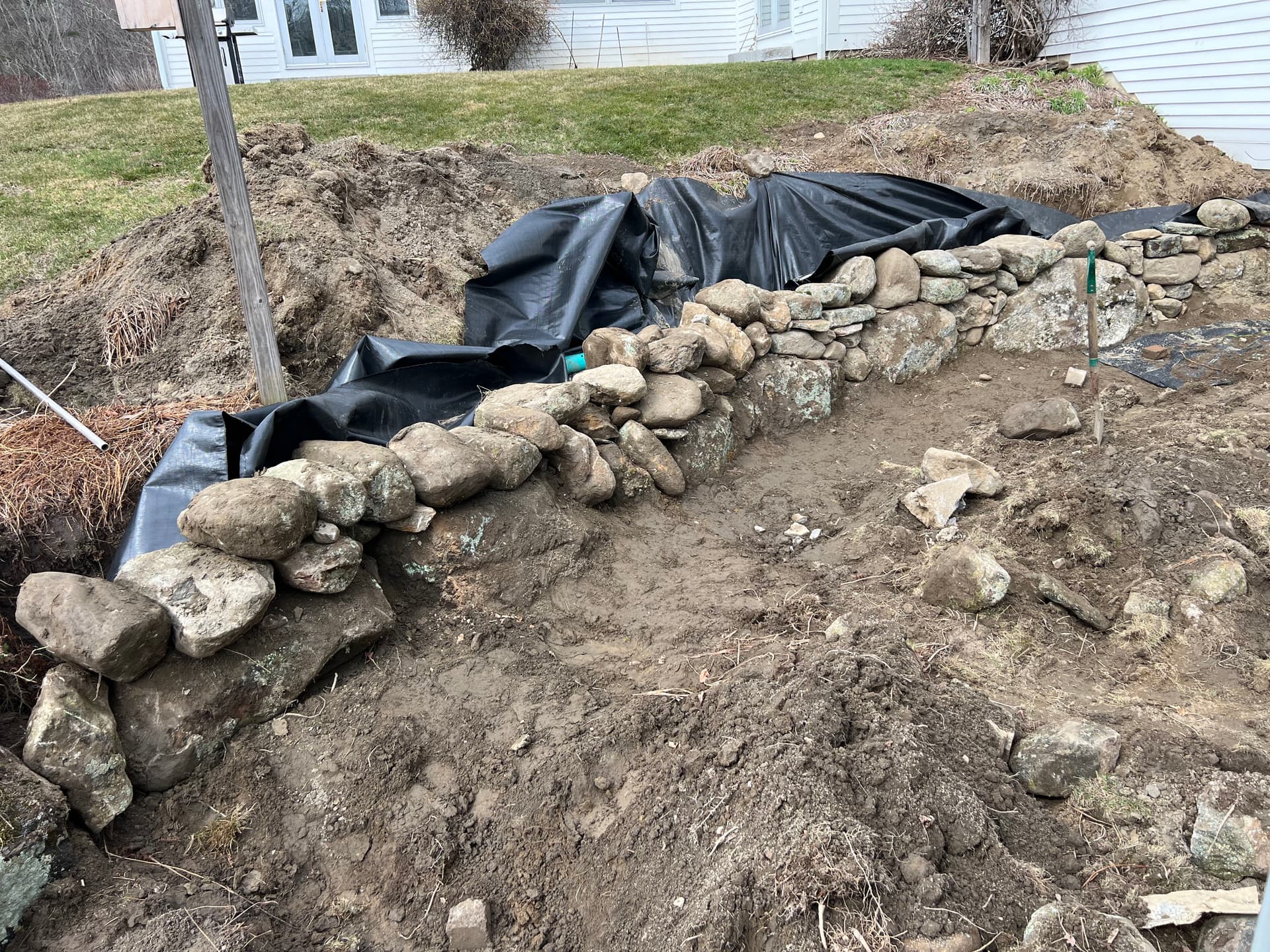
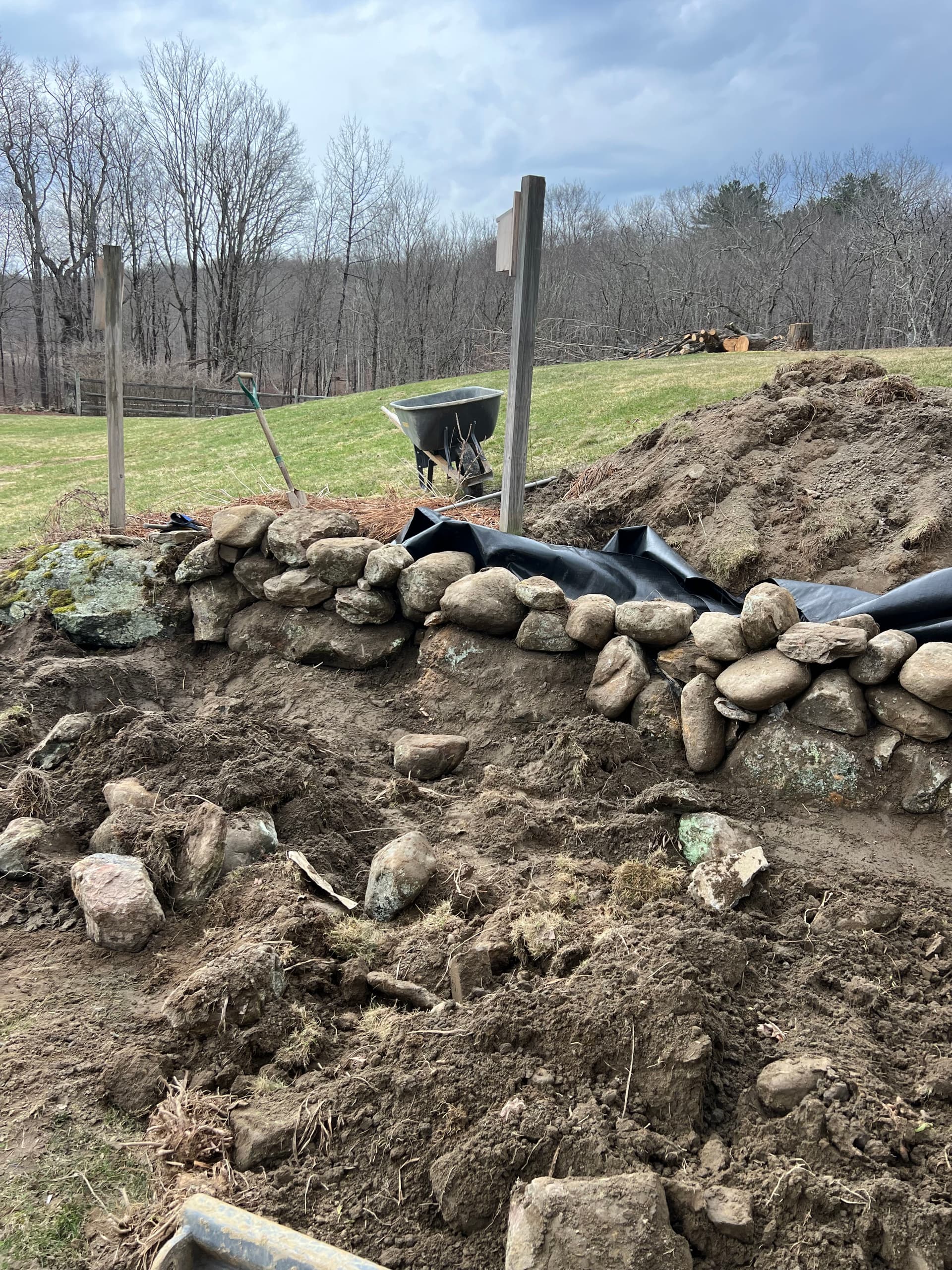
The original wall had completely lost its structure. Stones were jumbled and out of alignment, and the hillside behind it had nowhere to go. Before we could build anything back up, we had to tear it all the way down and start fresh. That meant excavating back into the slope to give ourselves a clean, level base to work from - light excavation work that sets the whole rebuild up for long-term success.
Here's something a lot of people don't realize about a proper retaining wall rebuild: drainage is everything. We incorporated a heavy-duty barrier layer behind the wall as we reset the stones course by course. That barrier manages water movement and keeps hydrostatic pressure from building up behind the wall - which is usually what caused the failure in the first place. Skip that step, and you're just building the same problem twice.
The fieldstones themselves were reset by hand, fitted tightly and intentionally. Each course was chosen and placed to interlock with the one below it, creating real structural stability rather than just the appearance of it. This is where hardscaping experience actually matters - knowing which stones to use where, how to angle them, how to tie everything together so the wall moves as one unit instead of shifting apart under pressure.
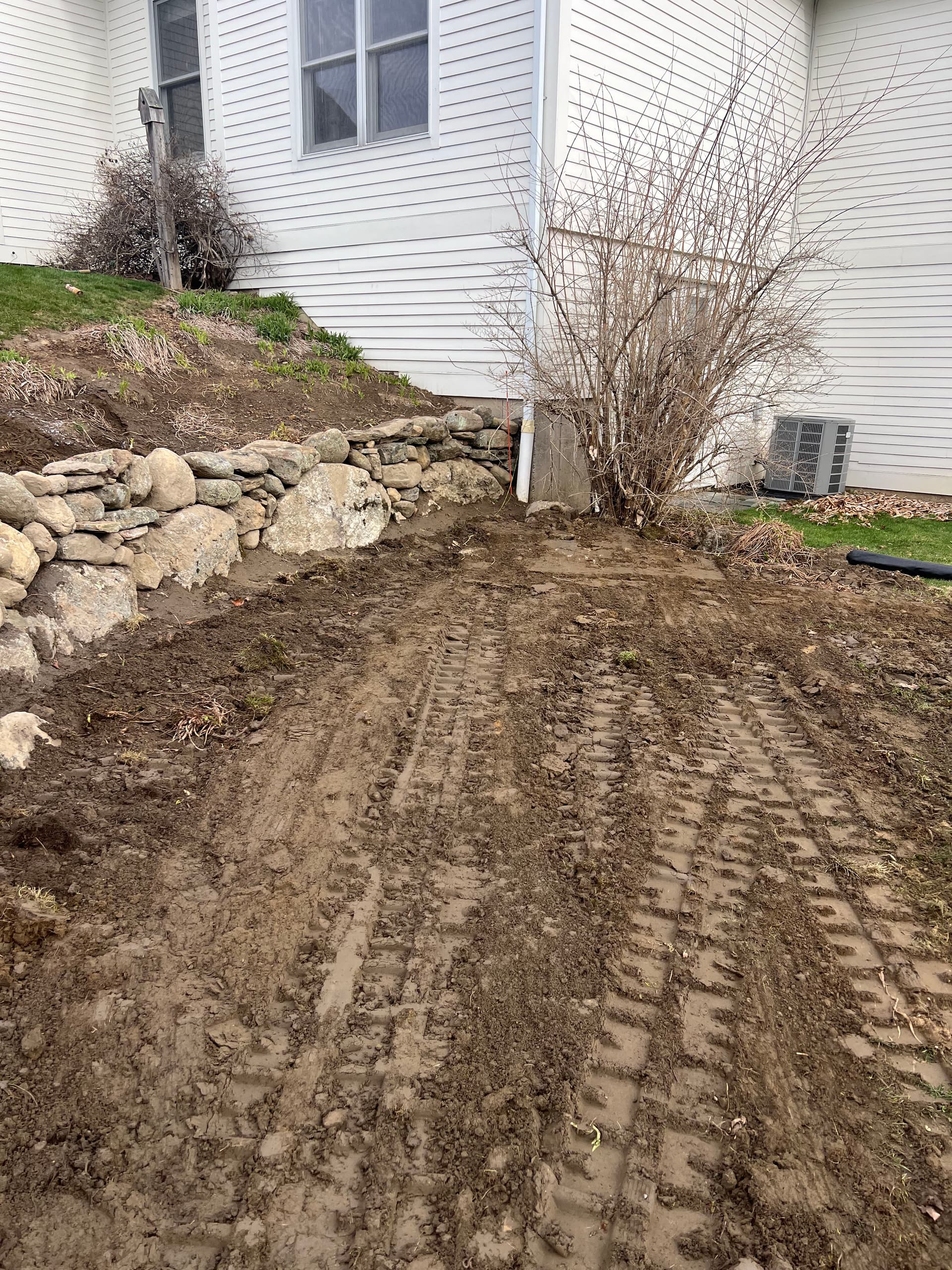
The finished wall sits clean and level against the hillside, doing what a retaining wall is supposed to do. The regraded soil around it is ready for what comes next. It's a serious improvement over what was there before - both in looks and in function.